Build Teams That Work Better Together

Explore how your team collaborates, so you can build on strengths, balance roles, and drive even stronger results.

Belbin is a behavioral assessment designed to understand how people naturally contribute in a team. Each person receives a report outlining their Team Role strengths and how they tend to interact with others.

By bringing individual reports together, Belbin creates a clear team view showing how contributions combine in practice, where there may be gaps or overlaps, and how those patterns affect collaboration, clarity, and results.

What are Belbin Team Roles?

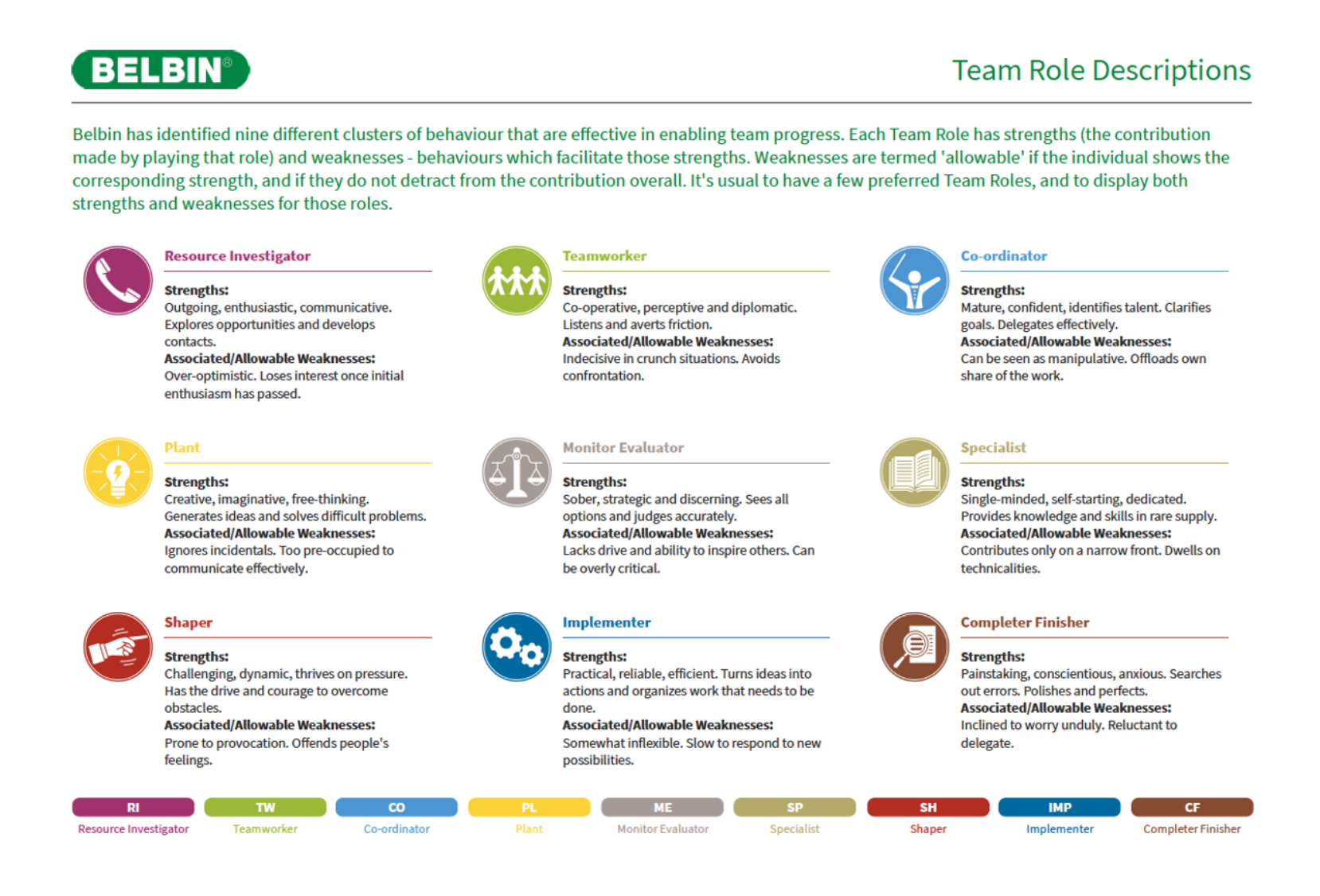
Belbin Team Roles describe the different ways people contribute when working in a team. They help make individual strengths visible, so teams can better understand how work gets done together.

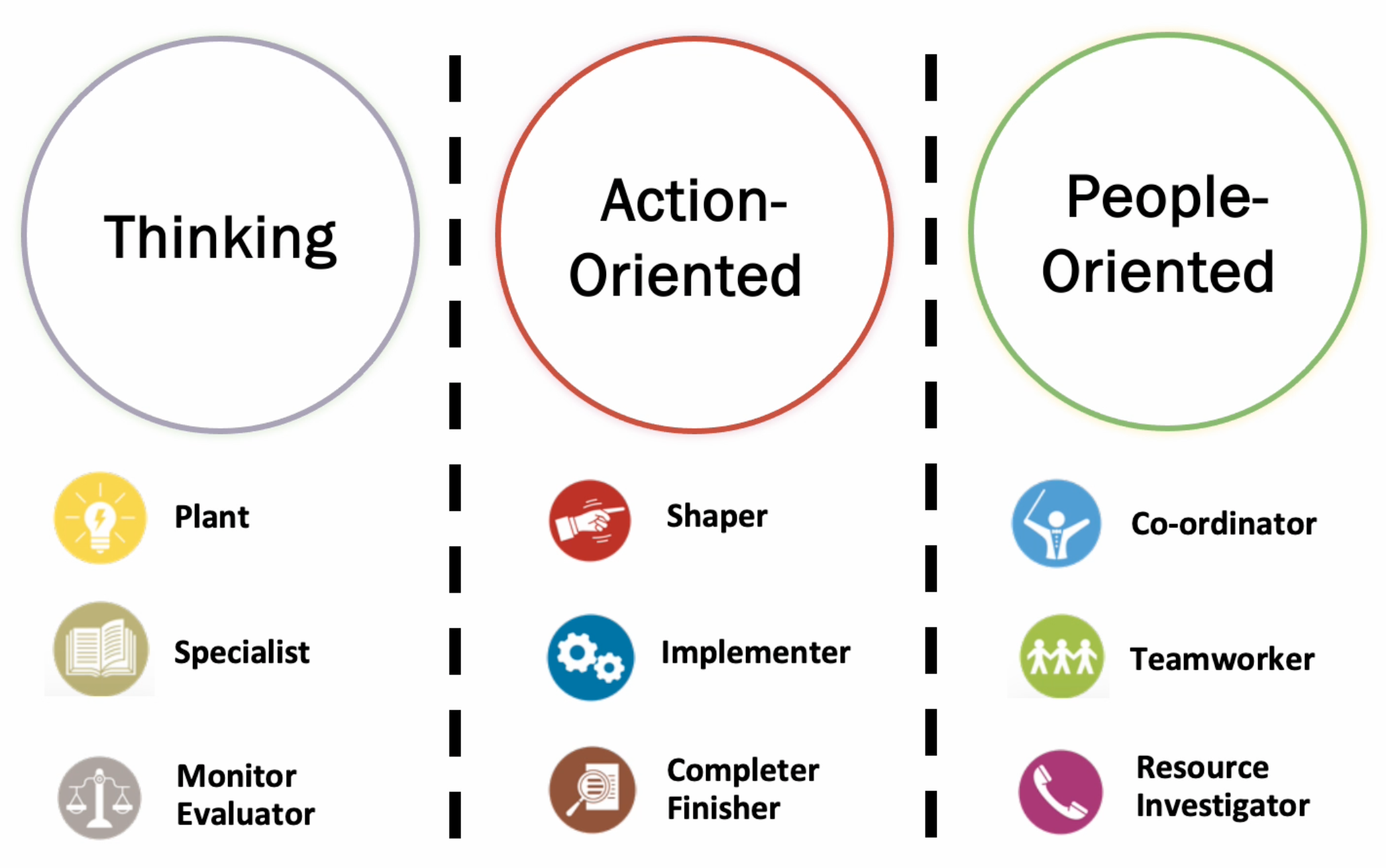
T

Thinking Roles

Generate ideas, evaluate options, and bring expertise to solve problems.

A

Action Roles

Organize work, drive progress, and make sure tasks are completed well.

P

People Roles

Build relationships, coordinate people, and keep communication moving.

There are nine Belbin Team Roles in total. These roles are not fixed traits but rather preferences for how we approach teamwork. Most people contribute in more than one way, and strong teams need access to a balanced mix of roles to work together effectively and perform at their best.
What you get with Belbin

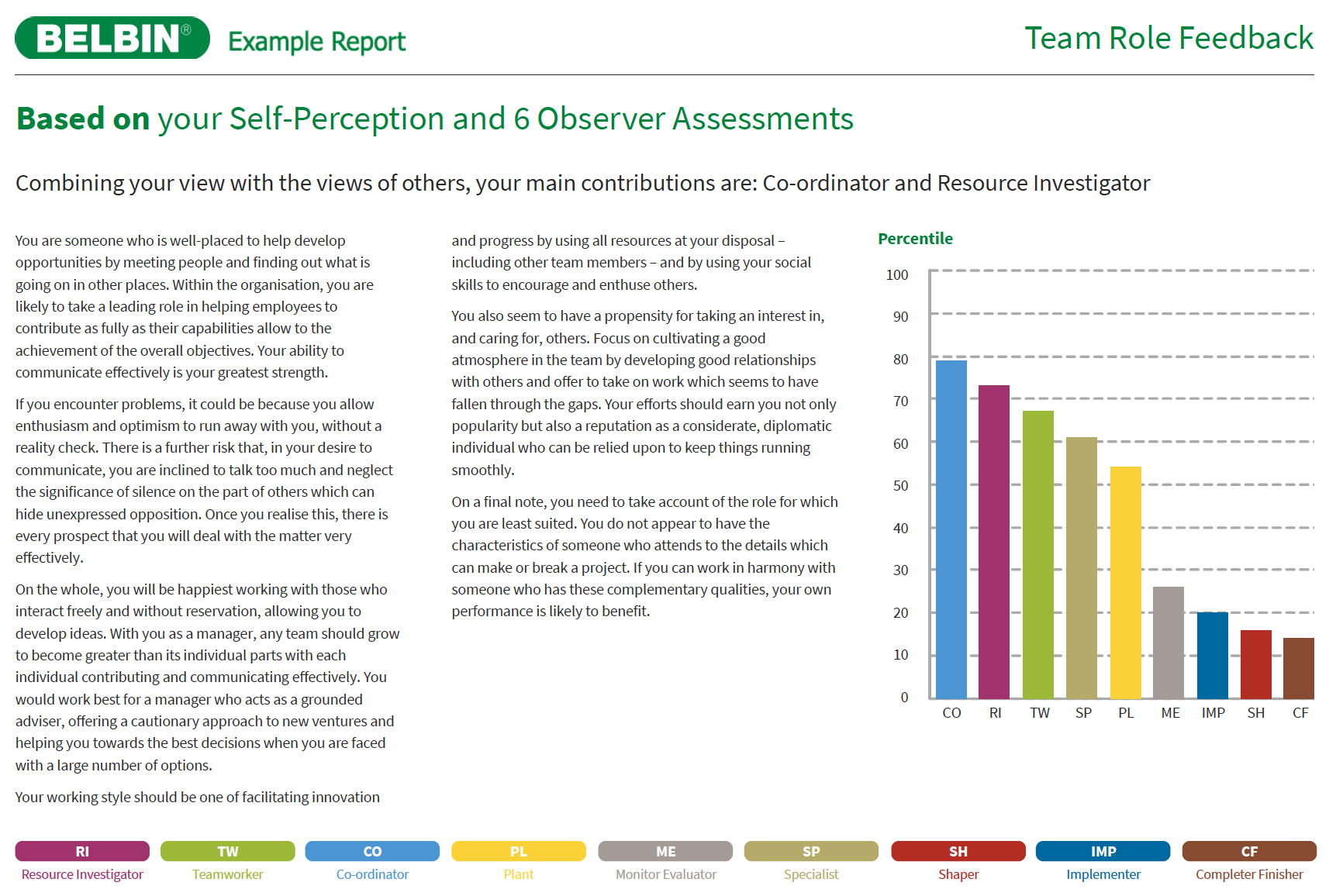
Each person receives a Belbin report that combines self-perception and observer feedback to show how they contribute in a team. When viewed together, these reports help teams see strengths, gaps, overlaps, and opportunities to work together more effectively.
How teams use Belbin

Teams use Belbin in different ways depending on their goals, but it all starts with a Belbin report. From there, teams can build on these insights:

Team reports

Bring individual insights together to understand the team as a whole.

Team reports help identify patterns, gaps, overlaps, and opportunities to improve how the team works together.

Facilitated sessions

Work with a certified Belbin facilitator to apply insights in a structured team setting and improve how your team works together day to day.

Sessions range from half-day introductions to multi-day programs, and can be tailored to your team’s needs.

Team Collaboration Mapping (DIY)

A cost-effective, in-house approach that helps teams understand themselves, each other, and team dynamics.

It highlights gaps, overlaps, and underused strengths, and provides practical steps to improve how teams work together.

Outcomes

Teams that use Belbin consistently see:

  • Improved team performance and productivity
  • Stronger collaboration and communication
  • Increased engagement and motivation
  • Better decision-making and problem-solving
  • More effective leadership and management

When teams use Belbin

Onboarding new team members and helping them integrate more effectively

Improving collaboration and how work flows across the team

Clarifying roles, responsibilities, and expectations

Supporting cross-functional teams working across different roles or departments

During periods of change such as growth, restructuring, or mergers

Wanting insight into observable and adaptable workplace behavior, not just personality style

Explore Belbin

0 resources
Explaining Belbin Team Roles thumbnail
Understanding Belbin

Explaining Belbin Team Roles

Video: what are Belbin Team Roles.

View resource →
What Are Belbin Team Roles? thumbnail
Understanding Belbin

What Are Belbin Team Roles?

More about the nine Belbin Team Roles, the three role categories, and how different working styles contribute to team effectiveness.

View resource →
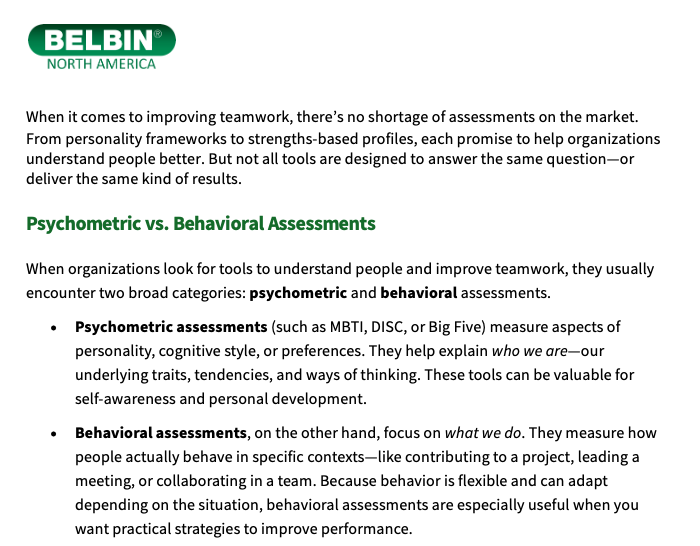
Psychometric vs. Behavioral Assessments thumbnail
Understanding Belbin

Psychometric vs. Behavioral Assessments

Why behavior-based tools provide more practical insight for teams.

View resource →

What Are Observer Assessments? thumbnail
Understanding Belbin

What Are Observer Assessments?

Observer assessments add real-world feedback so individuals can better understand how their behavior is experienced by others.

View resource →
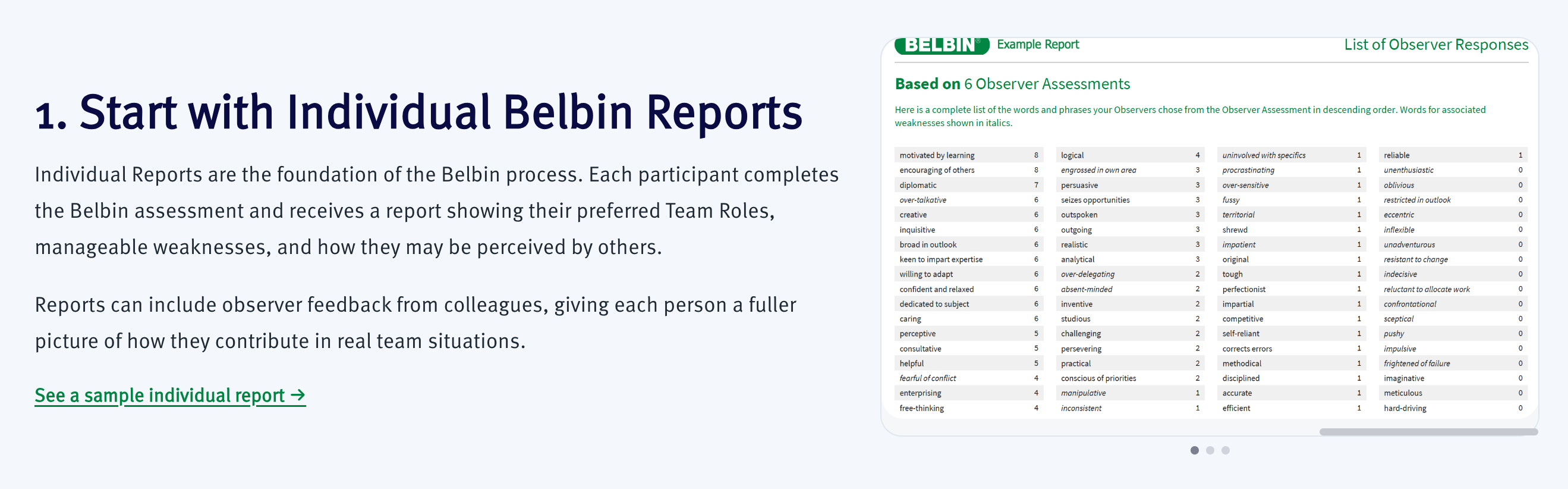
Getting Started With Belbin Reports thumbnail
Reports & Team Insights

Getting Started With Belbin Reports

Explore Belbin report options, how to purchase them, and the different service journeys available for individuals, teams, workshops, and ongoing team development.

View resource →
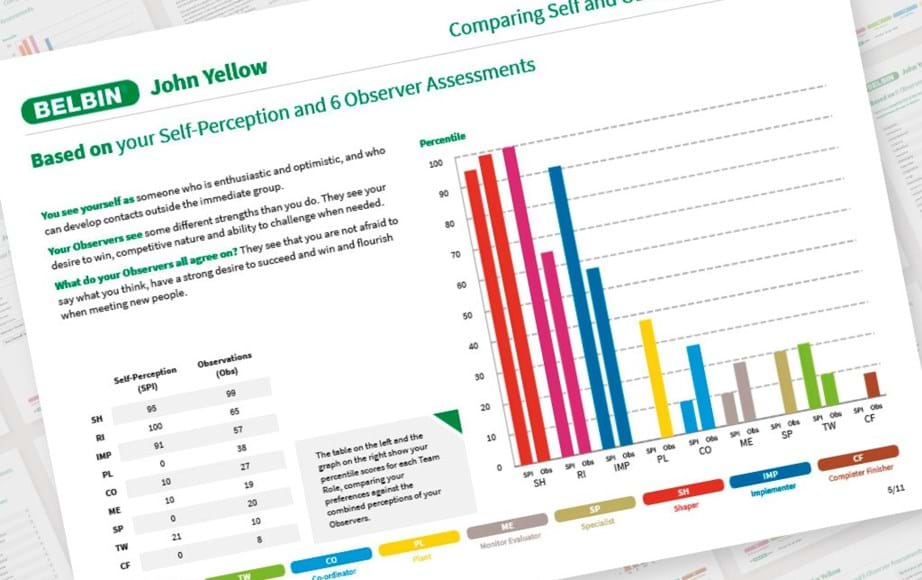
Sample Individual Belbin Report thumbnail
Reports & Team Insights

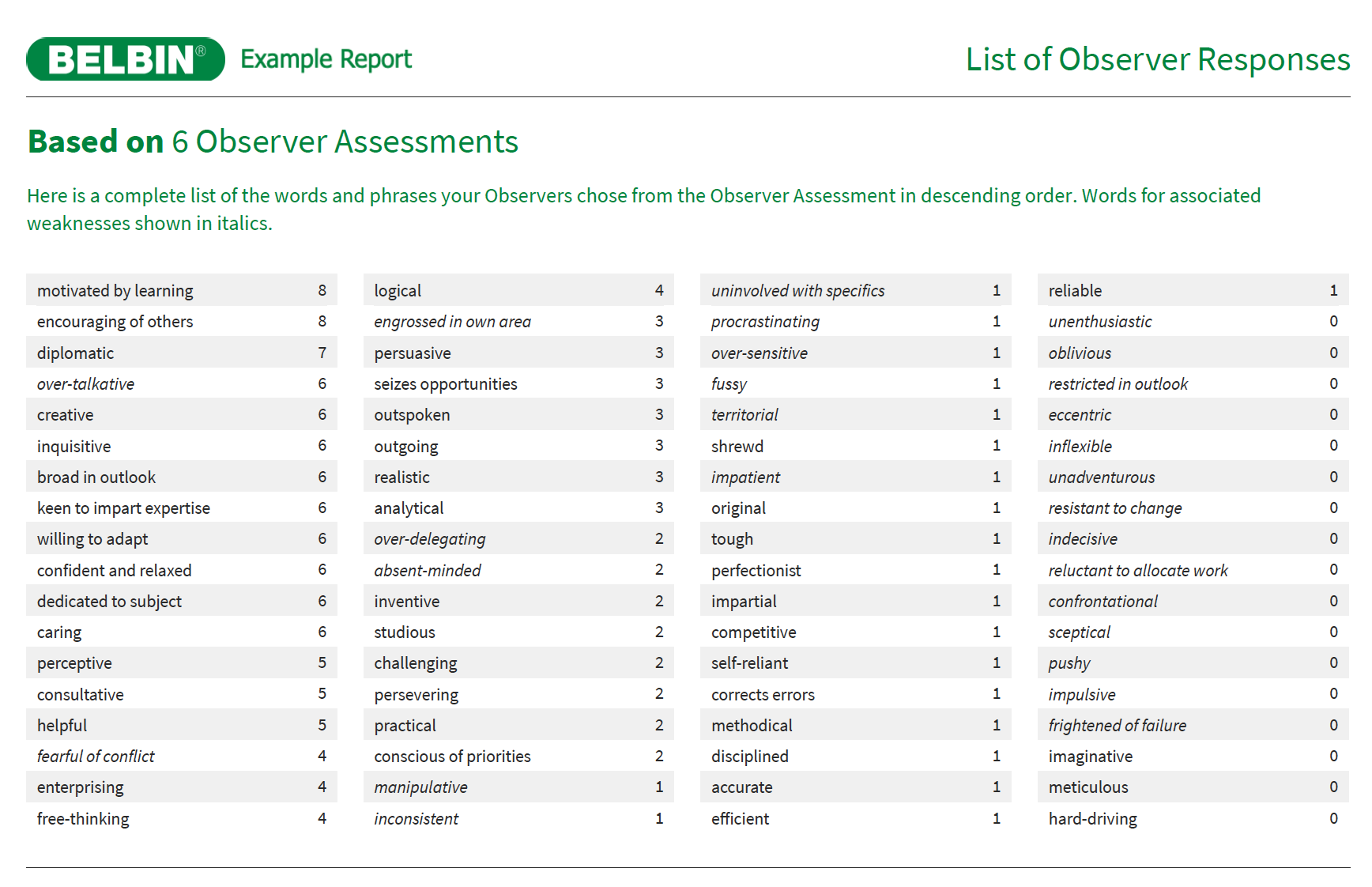
Sample Individual Belbin Report

An example individual report.

View resource →
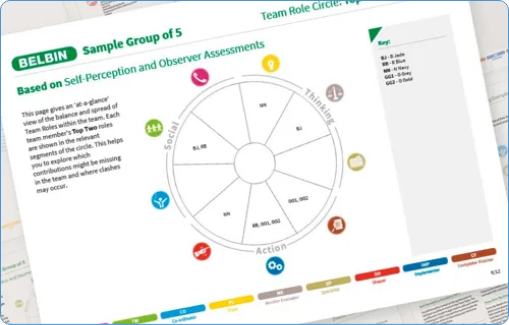

Sample Group Belbin Report thumbnail
Reports & Team Insights

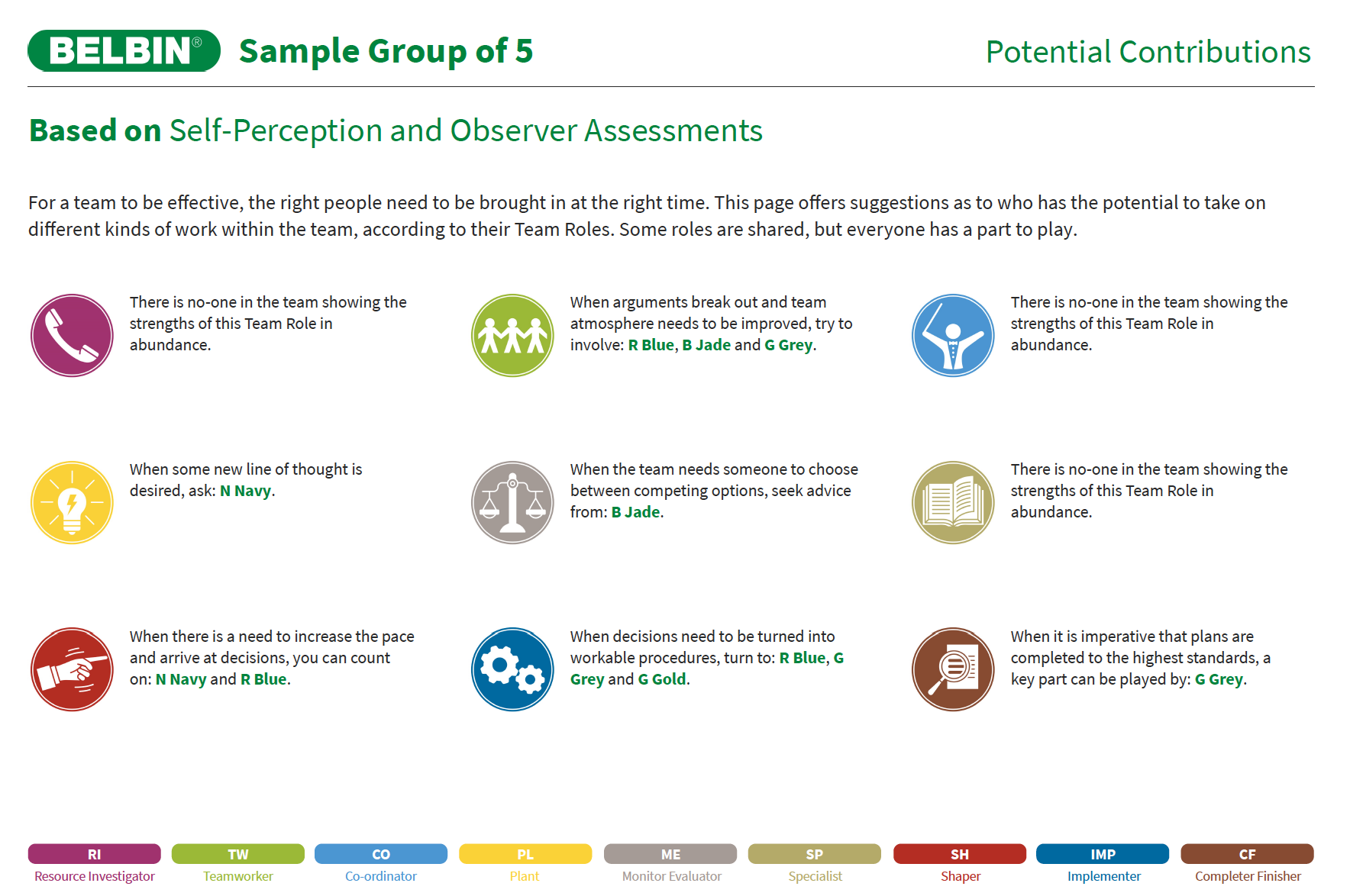
Sample Group Belbin Report

An example group report.

View resource →
Workshops thumbnail
How To Use Belbin

Workshops

Using Belbin to develop your own leadership style through a practical model focused on self-management, team impact, and continuous learning.

View resource →
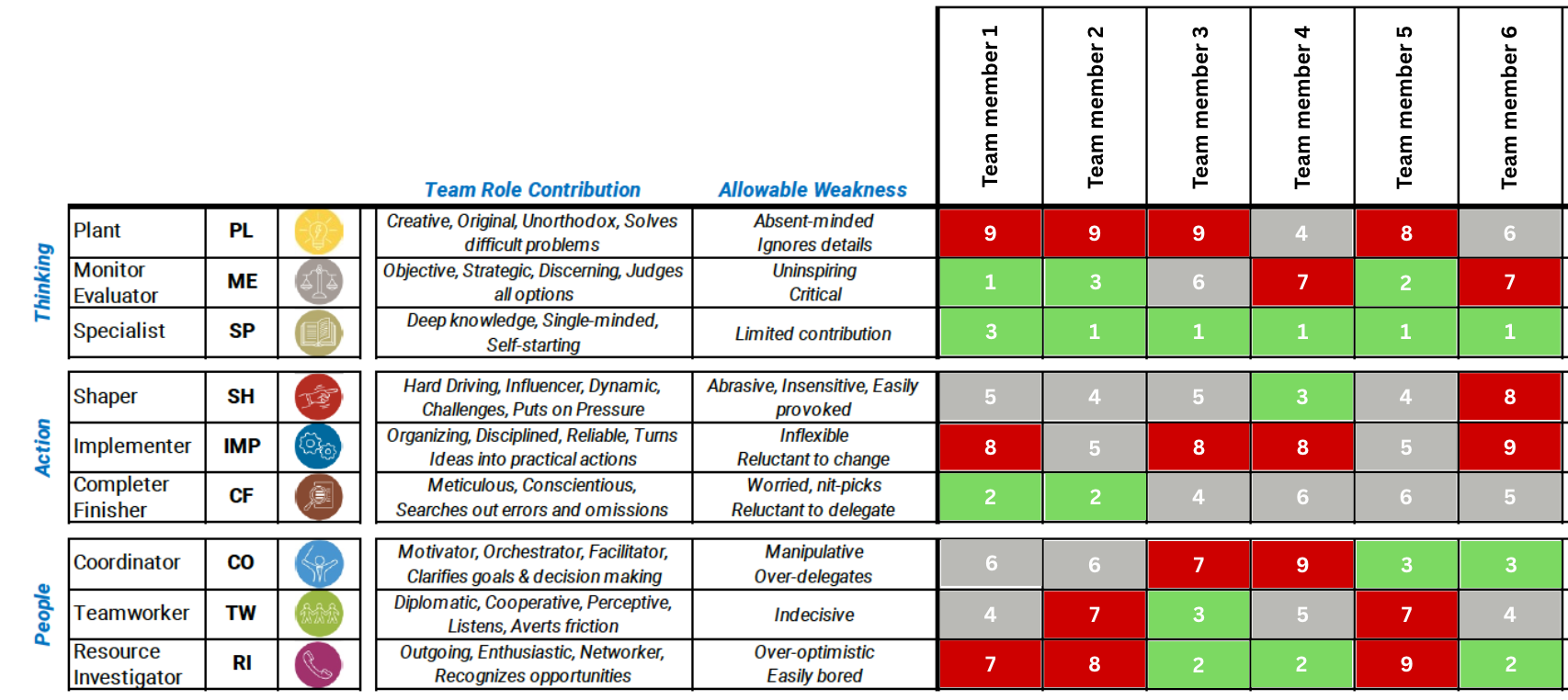
What Is Team Collaboration Mapping? thumbnail
How To Use Belbin

Team Collaboration Mapping (DIY Workshop)

An explanation of Team Collaboration Mapping, including steps and outcomes.

View resource →

Accreditation thumbnail
How To Use Belbin

Accreditation

Become accredited in Belbin and gain the skills to improve how teams work together using practical tools and insights.

View resource →
Client case examples thumbnail
Evaluating Belbin

Client Case Examples

Explore how organizations use Belbin through real examples and case studies.

View resource →
HR Leader's
Buyer's Guide thumbnail
Evaluating Belbin

Buyer's Guide

A practical guide to positioning Belbin versus other tools.

View resource →


FAQs thumbnail
Evaluating Belbin

FAQs

Find answers to common questions about Belbin.

View resource →

See the Team You Have. Build the Team You Need.

Wondering how your team actually works together?

We’ll show you how a Belbin assessment maps team contributions, highlights gaps, and helps teams improve performance without personality labels or guesswork.

Let’s start with a conversation.


Lindsay Lalla

Lindsay Lalla is the VP of Marketing and Client Support for Belbin North America. Most recently, she has been spearheading the introduction of the Belbin Team Role methodology into North America. Lindsay is a skilled facilitator, and also runs the Belbin Accreditation classes where she certifies others in the Belbin method.
Lindsay’s formal education is in instruction and performance. Combined with her 17 years of adult education experience, she brings a depth of understanding in how to deliver the highly experiential workshops that are a hallmark of the Belbin North America approach to education and organizational development.

Patrick Ballin

Patrick offers more than 25 years of experience with some of the most successful businesses in Europe as a consultant, change manager and executive coach.

He has helped many well-known organisations to get their ideas and projects off the ground by working with business leaders and their teams to optimise interaction, strategy and execution.
Patrick was Global Head of Supply Chain and Logistics Development for The Body Shop, an international retailer of ethical health and beauty products, and managed its change programme across 52 countries. In 2009, he set up the national redundancy coaching service, Rework, for the UK industry charity, Retail Trust. Patrick spent his earlier career with ACWL Group, one of the pioneering UK Apple Centres, where he was a divisional Director.
He holds an MA in Natural Sciences from the University of Cambridge, is a Visiting Lecturer for Brighton Business School, a Fellow of the RSA and coach for social enterprise incubator On Purpose.

Max Isaac

Max is the CEO of 3Circle Partners. He brings a depth of knowledge and experience from his career in general management and consulting in North America, England, Europe and Asia.
Max has assisted CEOs and senior leaders within client organizations with the design and implementation of Interaction Planning processes, team based organizational development programs and Lean Six Sigma initiatives.
Prior to moving into the field of organizational development, Max was the CFO for the Retail Division within The Molson’s Organization, where he took a lead role in growing the business to over $1 billion in revenues, doubling its size in four years through acquisitions and internal growth.
Max is co-author of Close The Interaction Gap, The Third Circle – Interactions That Drive Results, Setting Teams Up for Success and A Guide to Team Roles. He is also the contributing author of the Organizational Change sections of Mike George’s books Lean Six Sigma published in May 2002 and Lean Six Sigma for Service published in June 2003. Max is a registered CPA, CA in Canada. His undergraduate degree was earned at Witwatersrand University, South Africa.