Help people contribute where they add the most value
Team Collaboration Mapping helps teams see how people are most likely to contribute and where those strengths can be best used. The result is better alignment, stronger engagement, and more effective teamwork.
-
Align roles more effectively
Match team contributions more intentionally so important work is better supported.
-
Create shared clarity
Give the team a clearer understanding of who is contributing what and why.
-
Put strengths into action
Help individuals apply their natural strengths in practical ways that support the team.
-
Improve engagement and results
Better alignment can lead to improved collaboration, stronger engagement, and better business outcomes.
How it works
Three simple steps to understand your team and improve how you work together.
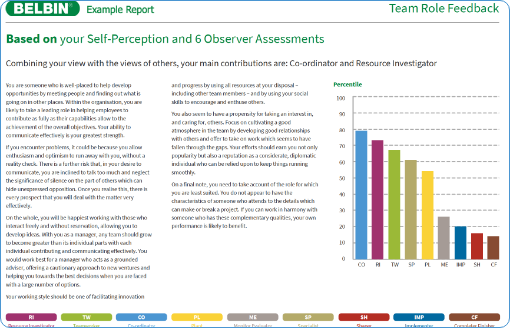
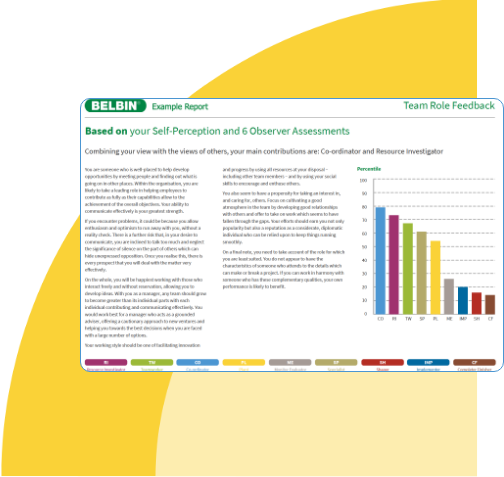
Belbin Report
Each team member completes a Belbin Report combining self-view and colleague feedback.
- Build individual self-awareness
- Highlight strengths and working style
- Create a shared foundation for the team view
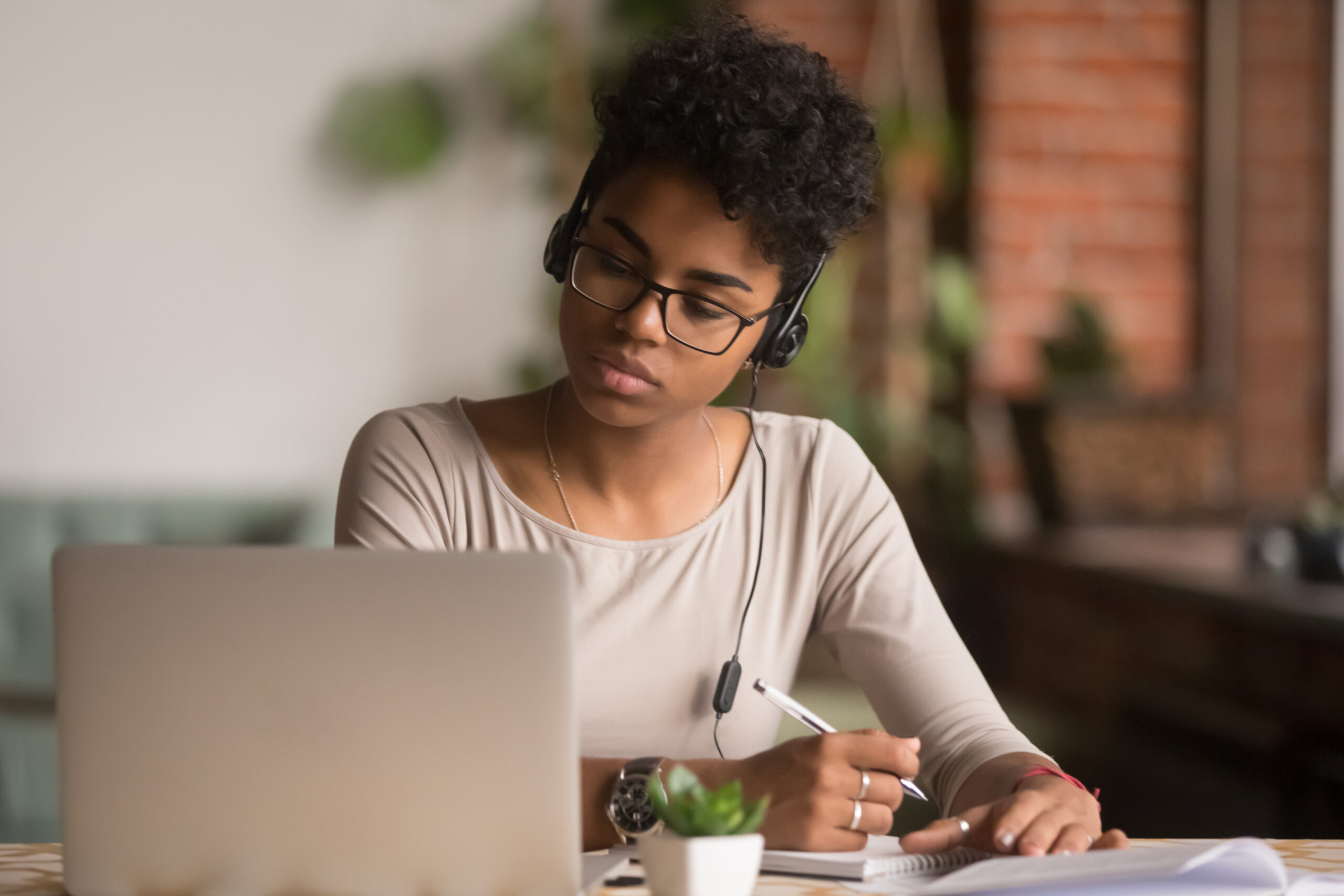
Shared Learning
A short eLearning module helps the team understand results and prepare for discussion.
- Understand Belbin reports
- Learn about the Team Collaboration Map
- Explore balanced and unbalanced team dynamics

Team Workshop
A facilitated session, guided internally or by a Belbin practitioner, helps the team apply insights and improve how they work together.
- Align roles and responsibilities more effectively
- Create shared clarity on who contributes what and why
- Agree on actions to apply strengths in practice
Frequently asked questions
Learn more about Team Collaboration Mapping, how it works, and whether it may be a fit for your team.
What are Belbin Team Roles?
+
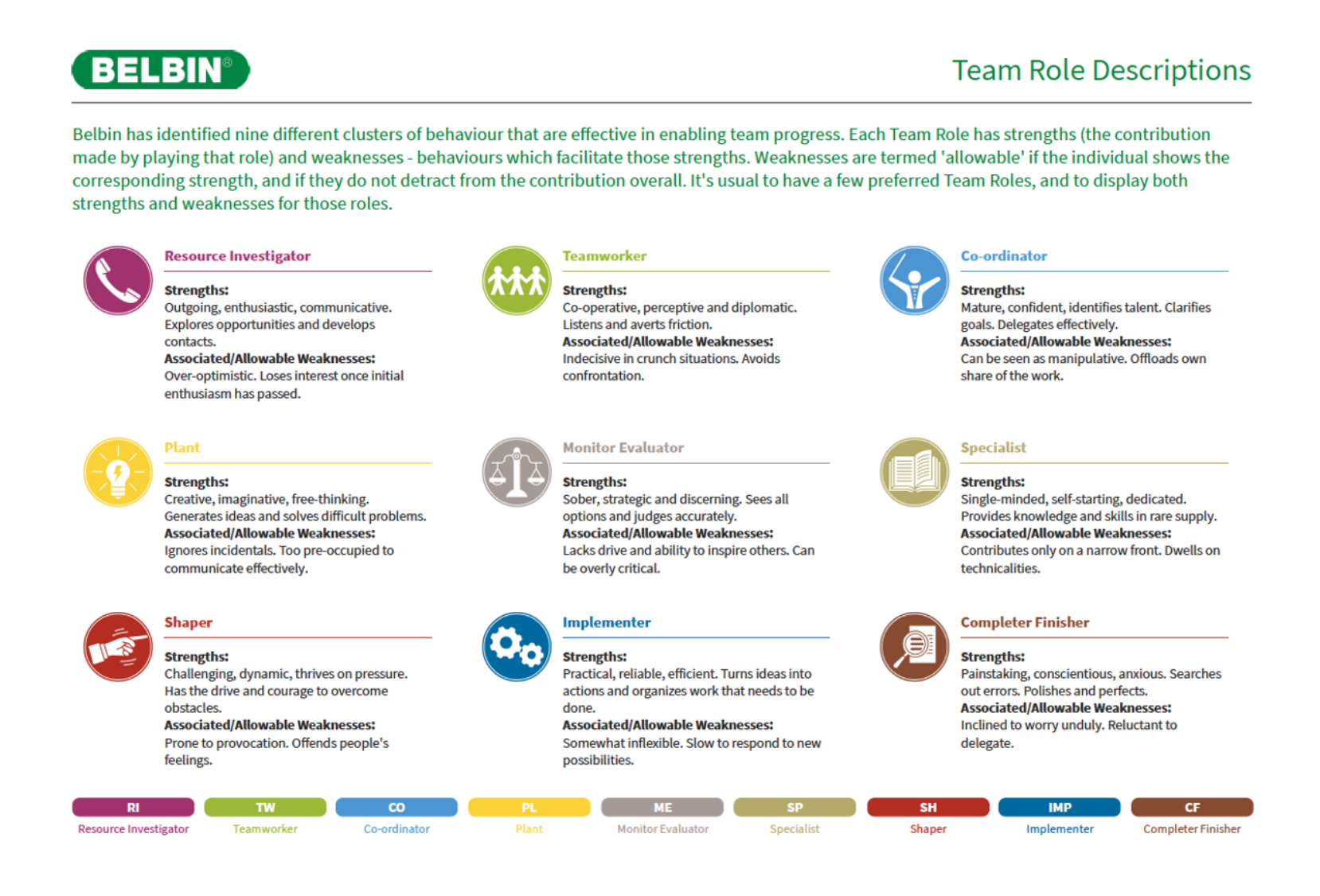
Belbin Team Roles are nine predictable ways people tend to contribute when working with others.
Based on Dr. Meredith Belbin’s research into team effectiveness, the most successful teams are not made up of people with the same strengths. They are made up of people whose different contributions are brought in at the right times.
Team Collaboration Mapping uses these roles to help teams understand how contributions are currently showing up across the group and how that impacts collaboration and performance.
What is a Team Collaboration Map?
+
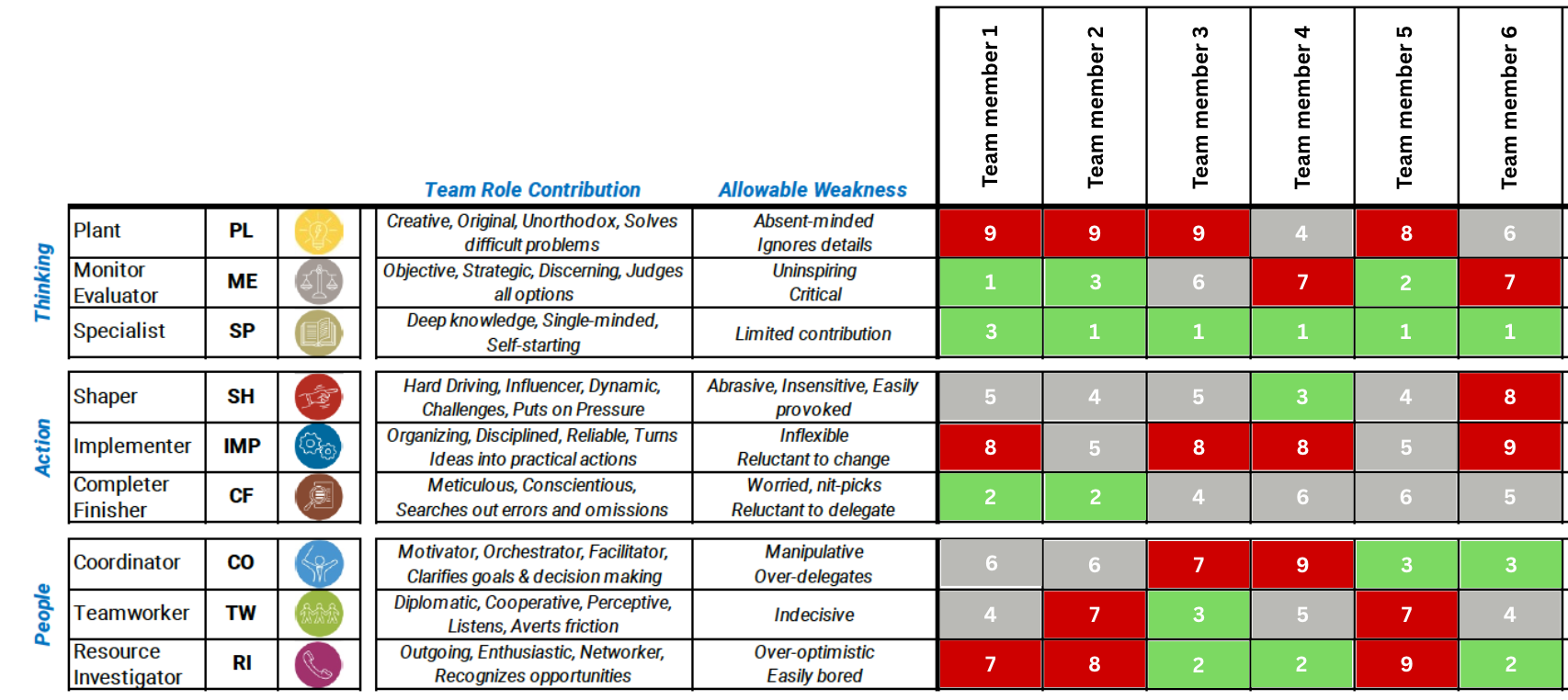
A Team Collaboration Map is a visual view of how contributions are currently showing up across a team, based on the nine Belbin Team Roles.
It helps teams see where strengths are concentrated, where gaps may exist, and how those patterns may be affecting collaboration, ownership, and follow-through.
By making this visible, the map gives teams a practical starting point for improving how they work together.
What happens in a Team Collaboration Mapping workshop?
+
The workshop is a structured, team-led session focused on how people contribute and work together as a team.
Using a shared Team Collaboration Map based on the nine Belbin Team Roles, the team builds a visual view of how individual contributions come together, where strengths are concentrated, and where gaps may be affecting collaboration and performance.
Through guided discussion and structured exercises, the team explores how they work together in practice, how different contributions show up, and agrees on practical changes that can be sustained over time.
Outcomes typically include:
- A shared understanding of individual strengths and contributions
- Greater awareness of how the team works together
- Clearer alignment of roles and expectations
- Practical ways to strengthen collaboration and overall team performance
What makes this different from other workshops?
+
Most workshops focus on personality or individual insight, describing preferences, styles, or how people tend to think. These insights can be useful, but they are often relatively fixed and harder to act on.
Team Collaboration Mapping focuses on observable behavior, how people actually contribute when working with others. Because behavior can be adapted, it creates a clearer path for making practical changes.
It also brings a team perspective. Rather than looking at individuals in isolation, it shows how contributions combine across the group and where adjustments at the team level can improve collaboration and performance.
Teams leave with a clearer picture of how they work together and practical changes they can apply right away.
How do I know if TCM is right for my team or organization?
+
Team Collaboration Mapping is most useful for teams that want a clearer view of how people are contributing and where gaps may be affecting performance.
If your team is experiencing unclear ownership, stalled progress, uneven follow-through, or collaboration that is not translating into results, TCM may be a good fit.
Want to talk through your team or see whether this would suit your organization? Contact us today.
Ready to purchase? Click here.