Team Collaboration Mapping allows people to do the work that suits their capabilities.
TCM is a technique used by teams to figure out how to use the unique strengths and capabilities that individual team members have. Often a team doesn’t have insight into the roles people naturally want to play. Instead, team members are given tasks that may in fact set them up to fail. TCM not only avoids this dynamic but also provides an avenue for people to discover their strengths and capabilities – leading to more engaged team members and a more successful and efficient team.
TCM facilitates:
- Assignment of team roles to individuals to ensure the role is executed efficiently
- A shared understanding by the team of who will play each role and why
- Actions individuals will take to contribute their role strengths to the team
- Increased employee engagement, improved individual and team performance and better business results

“The biggest outcome for the Retirement Business using [Belbin North America’s principles] has been to give clarity to the growth strategy and focus of the division, and to gain alignment with all departments – a collaborative approach that has assisted us with bringing new products to the marketplace quicker. Our team functions much better at the strategic level – as team effectiveness has improved – so has speed to market.”
Rick Ayers
Vice President, Retirement Plans, Securian
It works in four straightforward steps.
Step 1
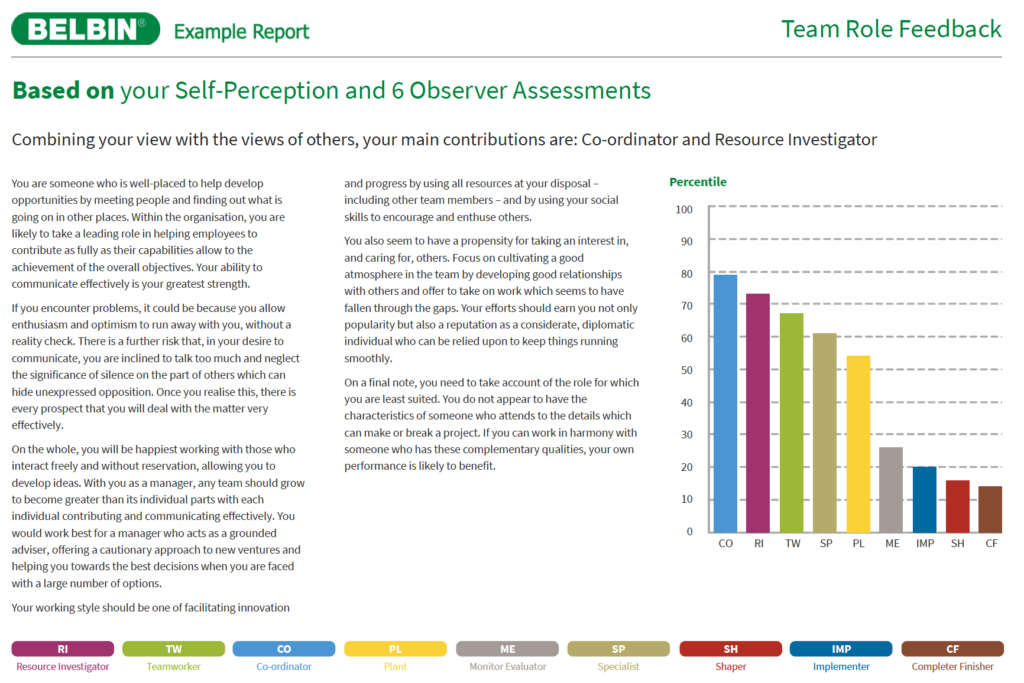
Each team member completes a Belbin Report, which is a verified team strengths tool that helps people to understand their strengths and weaknesses.
Step 2
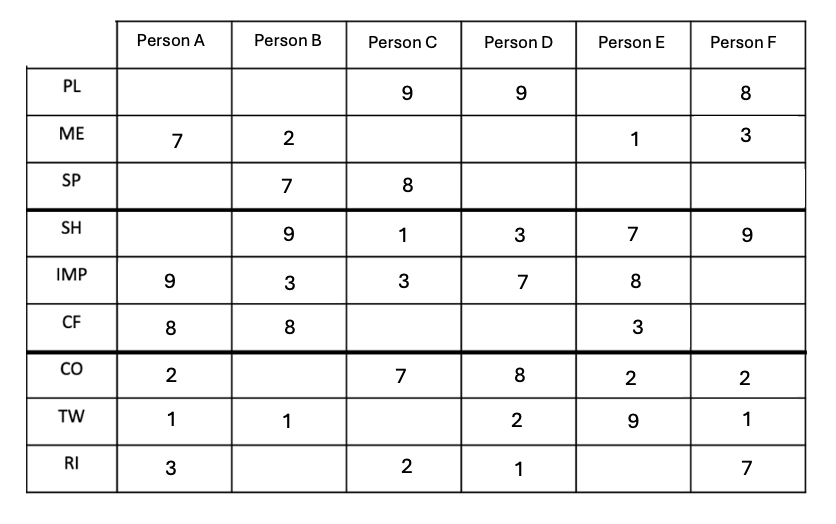
Individuals receive their Belbin reports and all reports are compiled into a Team Collaboration Map.
Step 3

Team members review a 1-hour online tutorial to explain key concepts that will help them understand their Belbin Report and Team Collaboration Map.
Step 4

A 2-hour team workshop is held where self-guided discussions occur to help the team apply their learning and increase team effectiveness.
“I’ve engaged with Belbin North America as a supplier for almost 20 years now while at two different global, multi-sector companies where we extensively utilized [their principles] to improve our company’s internal collaboration muscle. I find their training offerings to be very relevant in meeting our needs and intended outcomes, especially in using Belbin with literally thousands of employees to help them interact better together. The team at Belbin North America is one of the most responsive and flexible I have ever worked with, besides just being a good bunch of nice people. I cannot recommend them enough for helping take your team to a higher level of performance.”
Stephen Dennis
Director, Lean & Continuous Improvement, Granite Construction Inc.
What are Belbin Team Roles?
Did you know that you cannot predict a team’s results based on its members’ individual excellence or skills? Based on more than 9 years of research into team effectiveness, Dr. Meredith Belbin from Cambridge University discovered that:
It is the way that individual members of a team behave – not their individual excellence – that contributes to or detracts from a team’s effectiveness
There are nine predictable contributions/behavior patterns (called “Team Roles”) that need to be present in a team for it to succeed
Meredith Belbin’s research showed that the most successful teams were made up of a diverse mix of behaviors. To build high-performing teams, we need to represent each of the nine Belbin Team Role behaviors at the appropriate times.
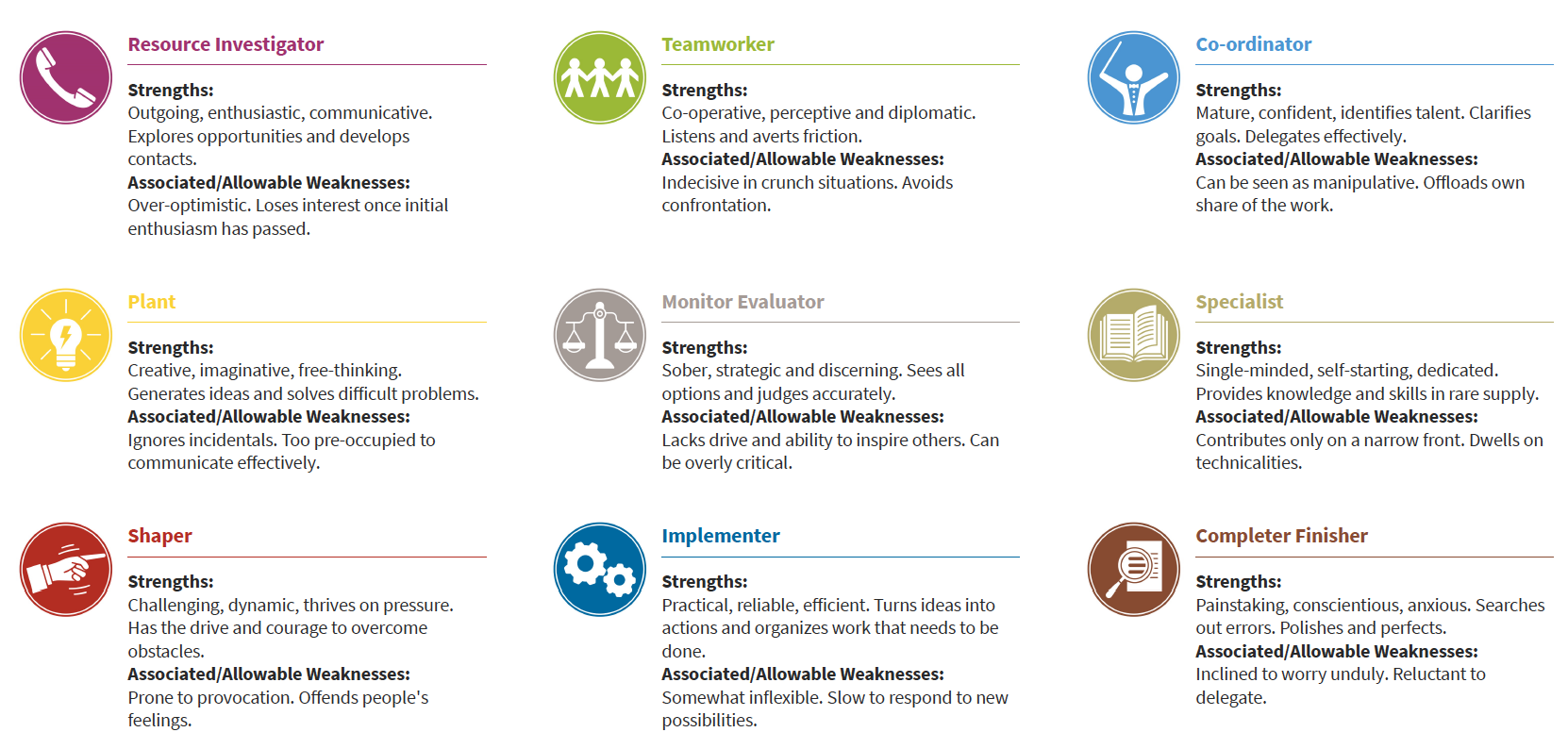
The Nine Team Roles are:
Trusted by the Teams Who Can’t Afford to Miss
Belbin has been trusted by global organizations for over 35 years—including Eli Lilly and Fortune 1000 companies who know performance isn’t about personality, it’s about team chemistry.
It’s not just theory—it’s the Gold Standard in team dynamics.
“Belbin gave us a framework we didn’t even know we needed. It changed how we collaborate.”
— Director, Global Strategy, Pharmaceutical Company
See the Team You Have. Build the Team You Need.
Curious how your team would map out? Let’s walk you through it.
In just one session, we’ll show you how a Belbin Survey works, what your Team Collaboration Map could look like, and how we help close the Interaction Gap—without personality labels, fluff, or guesswork.
Let’s start with a conversation.